This story was never meant to become a newspaper headline. Yet it raises a question that the system cannot ignore.
In Tarawali village of Firozpur district, where mornings begin with hard work rather than headlines, a ten-year-old boy unknowingly exposed a gap that policy papers often hide. His name is Shravan Singh. A fourth-grade student. And for a brief moment, he became the most visible face of a silent administrative failure.
During Operation Sindoor, the situation along the border was tense. Temporary military camps were set up in farmlands. Soldiers were deployed day and night to protect the nation. There were no gunshots, but there was a heavy silence—the kind that demands preparedness, logistics, and governance at its best.
That silence was broken not by an official vehicle or a supply convoy, but by a child.
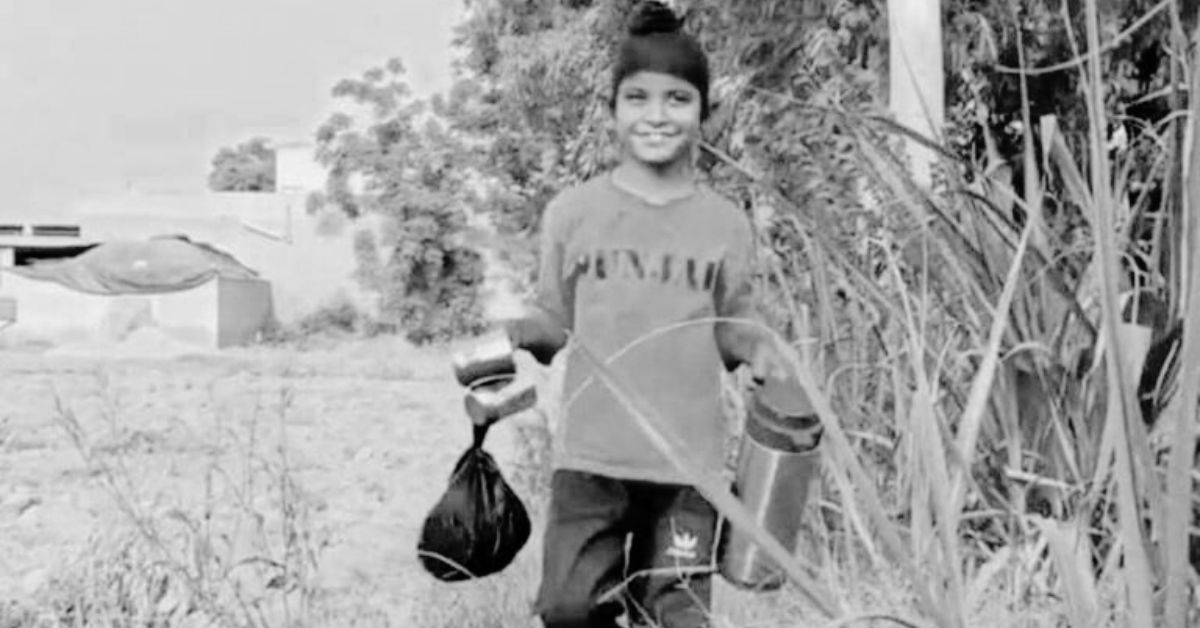
At an age when children are meant to focus on schoolbooks, Shravan stepped out carrying a glass of water. Sometimes it was water, sometimes lassi, sometimes milk, and at times hot tea. Under the harsh sun, he walked up to soldiers stationed in the fields and quietly offered them refreshment.
He did not shout slogans. He did not wait for permission. He did not know he was filling a gap the system had left behind.This was not a symbolic gesture. It was not a one-day act driven by emotion. Shravan returned day after day, offering what he could, without seeking recognition or approval. To him, it was service. To the nation, it should have been a warning.
Because when soldiers guarding the border rely on a child for basic human needs, the issue is not inspiration—it is accountability. Shravan’s father, Sona Singh, later explained that the soldiers had camped in their fields. From the very first day, Shavan felt compelled to sit with them and offer water. What many initially saw as innocence soon revealed a deeper truth: when systems fail quietly, citizens step in silently.
That spirit moved the soldiers. It moved the nation. And rightly, Shavan was recognised as the “Youngest Civil Warrior.” He was honoured by Lieutenant General Manoj Kumar Katiyar, Commander of the Western Army Command. His education was fully sponsored so that his future would not be limited by circumstance.
Later, he received the Prime Minister’s National Child Award, presented by the President of India. These recognitions matter. They honour intent. They celebrate humanity. But they cannot replace the question that lingers beneath the applause.
Why did a child need to step in at all?
Patriotism should not become a substitute for governance. Acts of kindness should not compensate for logistical lapses. When narratives focus only on emotional uplift, they risk normalising systemic shortcomings. Shravan did not fail the system. The system failed—and Shravan responded. When asked why he did what he did, his answer was simple. He liked being around the soldiers. He wanted to help. One day, he hopes to wear the uniform himself and serve the nation. There was no politics in his words. But there is politics in the silence that surrounded the situation he walked into.
Shavan Singh’s story does not redefine patriotism. It reframes responsibility. It reminds us that while compassion is admirable, governance is mandatory. A nation cannot run on goodwill alone.
Because patriotism may sometimes look like a glass of water—but ensuring that glass is never needed from a child is the responsibility of the state.
And that is the accountability this story quietly demands.



Leave a Reply