The Truth Caught Between Development and Destruction
Araavali ka Aahwahan
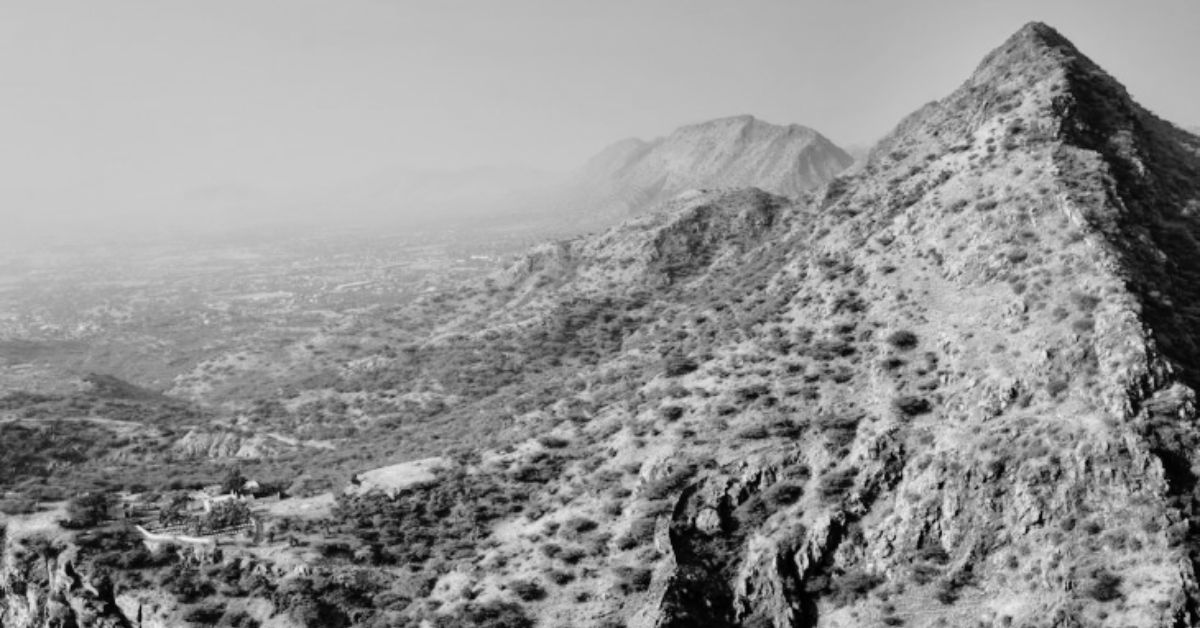
The Aravalli is not merely a mountain range.It is the ecological backbone of the Delhi–NCR region — protecting its air, conserving its water, and regulating its climate. Yet, time and again, decisions emerge to cut the Aravalli, allow large-scale mining, or dilute the laws meant to protect it.
This raises a critical question:
Why does such a decision keep returning to the policy table?
Why Was the Decision Taken to Cut the Aravalli?
Governments and administrative bodies present a set of practical and seemingly logical arguments:
1. Infrastructure Expansion
Rapid urbanisation demands new roads, housing projects, industrial zones, and commercial corridors. The Aravalli, spread across valuable land, is seen as a barrier to fast-paced development.
2. Mineral Resources
The region is rich in stone, gravel, and other construction materials. Mining these resources reduces construction costs and fuels large projects.
3. Employment Generation
Mining and construction are projected as sources of local employment, offering short-term economic relief to nearby communities.
4. Legal Loopholes
A significant portion of the Aravalli is not officially recorded as “forest” land, making it vulnerable to legal reinterpretation and policy dilution.
In simple terms,
the pressure for rapid development is high, and the Aravalli is viewed as an obstacle rather than an asset.
What Benefits Are Being Claimed?
Supporters of cutting the Aravalli argue that:
-Large projects will boost economic activity
-Construction costs will decrease
-Local employment opportunities will increase
-Illegal mining can be “regulated” under official supervision
On paper, these claims appear reasonable.
But the reality goes far deeper.
The Hidden Cost: Environmental Damage
What is often ignored is the most important truth:
The Aravalli is Delhi–NCR’s Natural Air Filter
Its destruction leads to:
-Sharp rise in air pollution
-Extreme and prolonged heatwaves
-Increased respiratory and health issues
Water Crisis: A Silent Emergency
The Aravalli plays a vital role in groundwater recharge by allowing rainwater to seep into the earth.
When the hills are cut:
-Natural water storage collapses
-Groundwater levels fall rapidly
-Water scarcity becomes permanent rather than seasonal
Impact on Forests and Wildlife
Leopards, nilgai, birds, and countless other species lose their natural habitat.
As forests disappear:
-Animals are forced into urban areas
-They are then branded as “dangerous”
-Conflict increases — and wildlife pays the price
Long-Term Consequences
The damage is not temporary.
Cutting the Aravalli results in:
-Dust storms
-Floods followed by drought
-Severe climate imbalance
A road or a building may age in 10 years.
But the Aravalli takes thousands of years to form again.
What Is the Real Conflict?
This is not a battle between development and the environment.
It is a battle between:
-Thoughtless development
-Responsible, sustainable development
If development progresses while protecting the Aravalli, there is little opposition.
But when development means:
-Cutting mountains
-Erasing forests
-Mortgaging the future
Then questioning it is not activism — it is responsibility.
Final Thoughts
Cutting the Aravalli may benefit a few people today.
But future generations will bear the cost.
Because mountains are not just piles of stone.
They are shields of civilisation.
And when that shield breaks,
humanity is the first to be wounded.



Leave a Reply